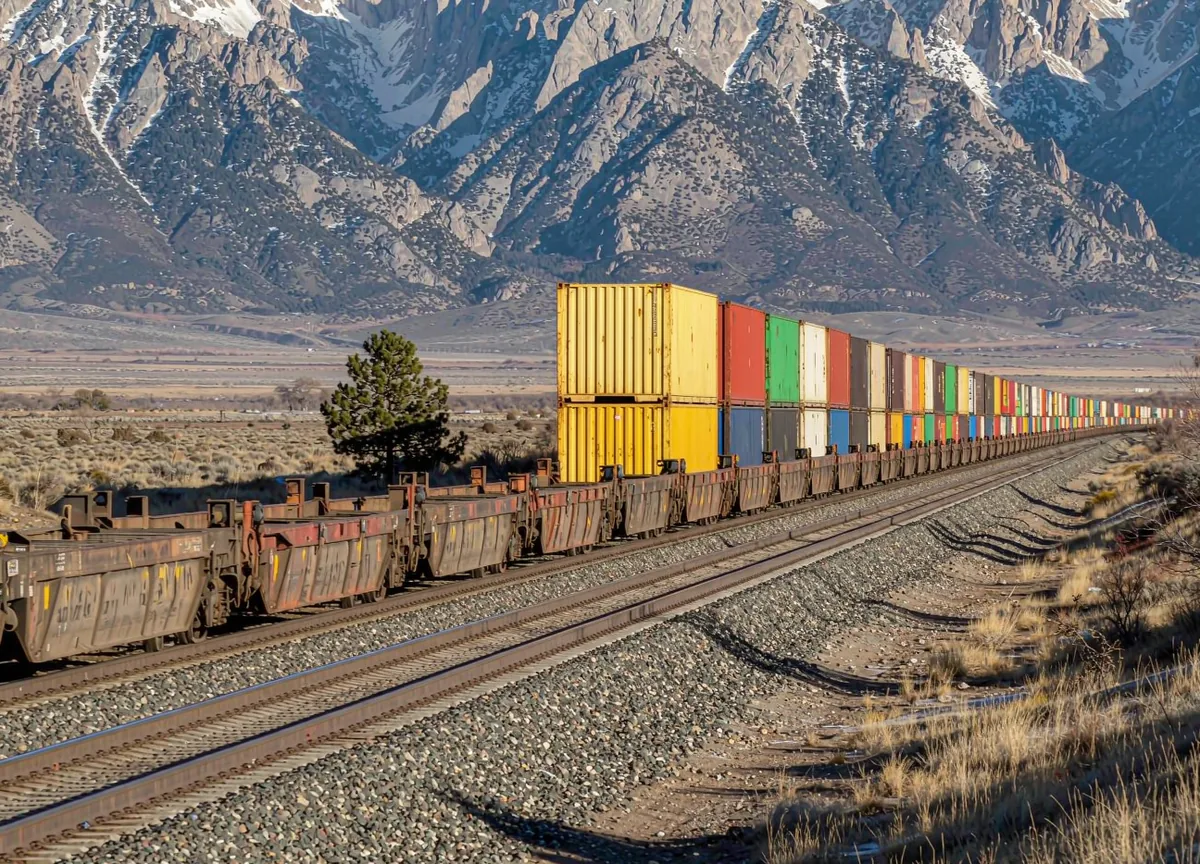
After 140,000 China-Europe Train Runs: How to Use Rail as Your Third Option When Ocean Freight Slides into Slack Season
On October 22, as a train bound for Moscow departed from Shenyang Puhe station, cumulative China-Europe Railway Express runs crossed the 140,000 mark, carrying cargo worth over USD 560 billion. The milestone is not the story in itself. What matters is how far the network's capability now extends: a record single month in May with 1,965 runs and 197,000 TEU; daily border handovers at six gateways up 12.8% year on year to 51.2 trains; customs clearance compressed to under 30 minutes; a 100% utilization rate for loaded containers for 49 consecutive months. Most notably for European traders, the southern corridor via the Caspian ran 746 trains in the first nine months, up 125% year on year, and is now in regular service.
Set against the ocean market, this expansion arrives at exactly the right time. The fourth quarter is a classic slack-season bargaining phase on the Asia-Europe lane: carriers prop up rates with blank sailings and announced increases while demand stays soft, futures markets swing sharply, and the gap between headline and transacted rates keeps widening. Ocean freight is genuinely cheap right now, but schedule reliability is deteriorating. Blank sailings push out original sailing dates, failed transshipment connections lead to rolled containers, and none of these hidden costs appear on a quotation. This is precisely where rail earns its place. Twenty-two timetable-guaranteed trains run each week between nine Chinese cities and six European cities, delivering predictable transit times that no carrier capacity management can touch.
How should shippers actually use it? Bucket your European shipments by lead time. Urgent orders go by air, expensive but reliable. Non-urgent replenishment goes by sea, since Q4 ocean rates to Europe are near cyclical lows and time-flexible cargo can wait. The middle bucket, orders with a 25 to 35 day lead time that are sensitive to certainty, is where rail dominates. Mid-value machinery and seasonal consumer goods locked onto a train arrive when promised, which beats gambling on ocean schedules. Shippers who historically ruled out rail usually did so for two reasons: presumed scarcity of train slots, and uncertainty about transit times on the southern corridor now that it bypasses the northern route. With the southern corridor in regular service and border crossings faster, both concerns are fading and deserve a fresh quote.
Another overlooked development: the range of cargo rail can accept is widening. 40-foot flexitanks and refrigerated containers are now in service, opening the railway to non-hazardous liquids and cold-chain goods. Chemical and fertilizer shippers should ask their forwarders about options. New 35-ton automotive containers also give vehicle exporters an alternative more flexible than ro-ro vessels. On routing, the northern line is fastest but geopolitically exposed, while the southern corridor adds a few days but offers a steadier path. Ask your forwarder to specify the routing in writing; the same shipment can vary widely in rate and transit time across corridors.
Rail and ocean are complements, not substitutes. Ocean supplies the cost advantage in slack season, rail supplies certainty, and air covers the true emergencies. Balancing all three legs against your order calendar is what actually smooths a supply chain. A-Choice recommends customers shipping to Europe run a quarterly corridor review, laying each shipment's time requirements against its real cost; there is usually a few percentage points of optimization hiding in the mix.