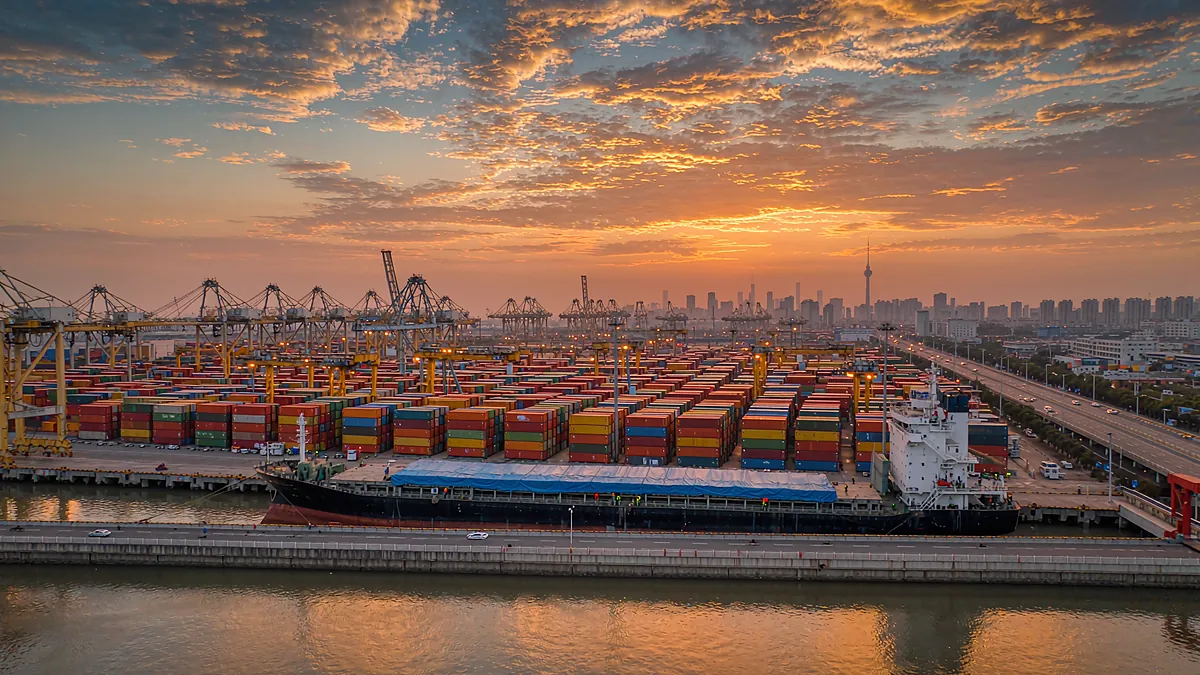
Durban waits stretch past a month: build berth delays into your South Africa delivery dates
Durban is the largest container hub in southern Africa, and most cargo from China bound for South Africa — and for inland markets distributed via South Africa — transits here. On the trades we operate, this route links chrome and manganese concentrates and other non-ferrous flows with fertilizer, timber and machinery moving in both directions; when Durban clogs, the rhythm of the whole southwest Indian Ocean feeder network slows with it. Congestion has worsened markedly since mid-October: reporting from Kuehne+Nagel's platform cites terminal information showing berth delays at Durban's Pier 2 container terminal stretching from three days to more than a month on some services, while Pier 1 is recovering but some services still face waits of one to two weeks or more. Equipment breakdowns, high yard density and a terminal system migration have combined to slow operations. As of 21 October, arriving vessels at Durban were delayed by an average of about six days and departures by 5.8 days, and in week 43 vessels spent close to eight days in port on average. The peak-season surcharges Maersk, CMA CGM and others began adding on South Africa routes in late October are, in essence, a price tag on that waiting time.
The congestion has changed how carriers work the port. COSCO, for example, has split loading and discharge operations across different voyages on some vessels, diverted others to multi-purpose terminals, and arranged some calls as discharge-only, while a few ships received priority discharge. Maersk has also adjusted the port rotation of its SAECS service: ONE RESILIENCE will now call Coega, Cape Town, Durban and London in that order, with Durban scheduled for 4 November. For shippers, delivery and inland transport plans sequenced around the original rotation now need to be reconfirmed shipment by shipment with carriers and local agents.
Four practical steps for Durban-bound cargo. First, build the waiting time directly into your schedule: do not pad by the customary three to five days; plan in bands of one to four weeks, take the top of the range in peak season, and share that float with your consignee. Second, get written confirmation from the carrier on whether your vessel will work both directions or discharge only; if discharge-only, containers originally booked on that call have been rolled, and rebooking onto the next sailing should happen as early as possible. Third, agree free storage periods up front: demurrage and detention at Durban escalate daily, and a box sitting in the yard for a month can generate charges comparable to the ocean leg itself — lock the free period and any cost caps into the booking confirmation. Fourth, for timber, agro-inputs and other goods requiring fumigation or quarantine, port delay stacks on top of inspection time; tell your consignee early to avoid destination warehouse rent and delivery disputes.
Durban is not an isolated case: Conakry in West Africa and Dar es Salaam in East Africa are also seeing long anchorage waits, and schedule reliability across African trades is unlikely to improve much this quarter. The number to watch is not a few hundred dollars of peak-season surcharge but the days your container drifts at anchor — a week of demurrage plus detention often exceeds the freight increase itself. Weigh time and money together before booking rather than arguing after arrival. We continue to track Durban's recovery; customers with shipments planned to South and southern Africa should engage us early on scheduling.