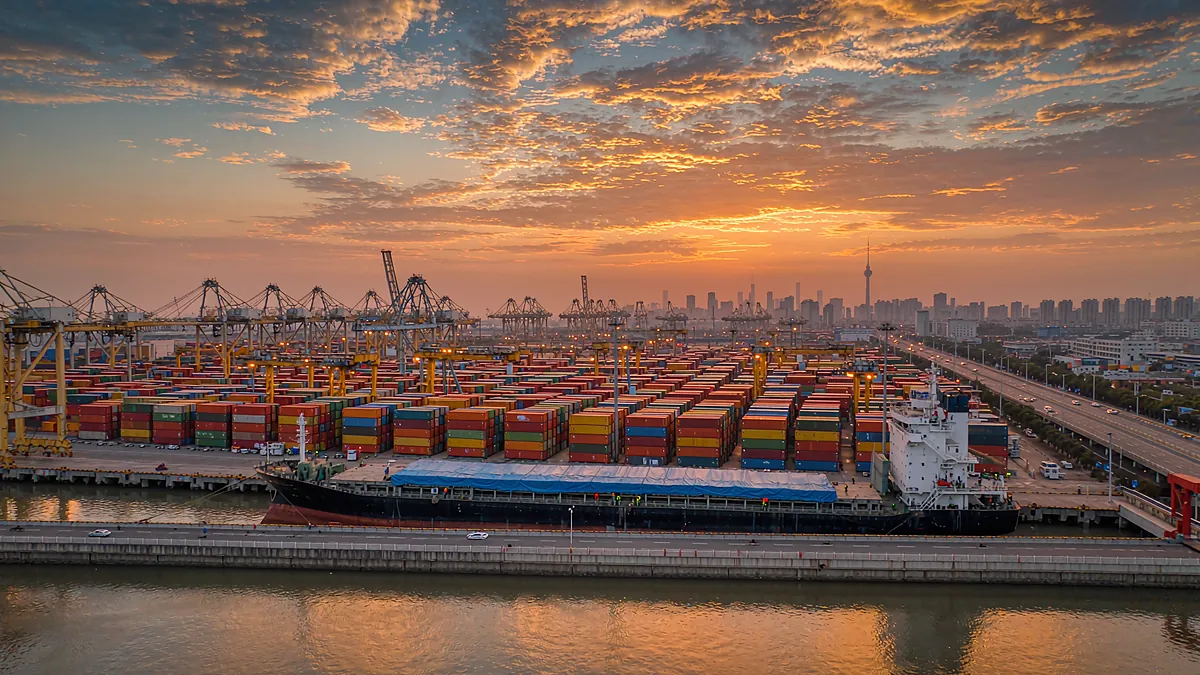
Only Two Containerships Entered the Persian Gulf Last Week: Three Checks Before Shipping to the Middle East
One number in Drewry's latest capacity monitor deserves every shipper's attention: in Week 42, only two containerships entered the Persian Gulf, down from five the week before. Behind it is a sharp deterioration in the Strait of Hormuz — 23 vessels were attacked in and around the strait in the first two weeks of October, nearly double the monthly average since the conflict began, and at least one containership has been hit and sunk. Transit through the strait is shifting from "risky but workable" to selective passage, where whether a ship gets through increasingly depends on owners' risk appetite and insurance costs.
The knock-on effects are already showing up in quotations. Several carriers have moved their terminus from Jebel Ali, inside the strait, to Khor Fakkan and Fujairah on the UAE's east coast, trucking or barging cargo into the Gulf hinterland; other services now transship via Sohar and Salalah in Oman; the Cape of Good Hope routing adds 10 to 14 days. Beyond freight, war-risk surcharges have become the largest single increase on Middle East quotes — some estimates put combined freight and insurance above one-third of cargo value for certain goods. For low-value cargo, whether to ship at all now requires a fresh calculation.
A-Choice handles regular Middle East shipments of fertilizer, project cargo and energy equipment. Based on recent bookings, we advise shippers to check three things. First, confirm whether the discharge port is inside or outside the strait. The inland leg from an alternative port costs extra and takes extra time; promised delivery dates must be re-planned rather than carried over from pre-crisis schedules. Second, check the insurance. Standard all-risks cargo cover typically excludes war losses; war-risk cover must be bought separately, and the London market's Joint War Committee has added Bahrain, Kuwait, Oman and Qatar to its listed areas — if your policy does not cover them, a loss will not be indemnified. Third, pin down the validity of every quote. Port rotations, bunker costs and war-risk premiums are all moving; a quote from last week may already be void, so get the validity period in writing before booking confirmation.
By commodity, oil products and bulk cargo are hit hardest inside the strait, while containerized cargo absorbs rerouting at a relatively manageable cost. In our operations, fertilizer and construction materials tolerate longer transit and still ship economically via out-of-strait ports plus trucking; time-critical cargo should carry at least a week of buffer, with a fallback vessel schedule agreed before signing.
There is no sign of a quick resolution: carriers are watching, insurers are tightening cover, and alternative ports have limited capacity. Right now, locking risk clauses into contracts matters more than squeezing freight — delivery flexibility, cost sharing for port substitutions, and who buys war-risk cover should all be in writing. The Middle East route is still open, but the gap between "open" and "worthwhile" is wider than it has been in a decade. Do the arithmetic before you ship; it is far cheaper than fixing things afterward.