The Boundary of General Cargo Is Tightening: 14 Carriers Want Lithium Batteries to Become Visible Cargo
In late October, the Cargo Incident Notification System (CINS), whose members are 14 major container lines, published a position paper calling for reform of Special Provision 188 of the IMDG Code. Two proposals sit at its centre: every shipment containing lithium-ion batteries should be subject to a mandatory dangerous goods declaration, regardless of whether it qualifies for the current exemption; and consignments moving under SP188 should be capped at 20 kg of gross battery mass per container, above which full Class 9 compliance applies.
SP188 has been the easiest route in the rulebook for a decade. A lithium-ion cell rated at no more than 20 Wh, or a pack at no more than 100 Wh, that passes the drop test can travel without a DG declaration, booked, stacked and cleared as general cargo. The flaw is granularity: the provision governs each package, not the accumulated total inside a box. A carrier can see from the booking that batteries are on board. It cannot see how many.
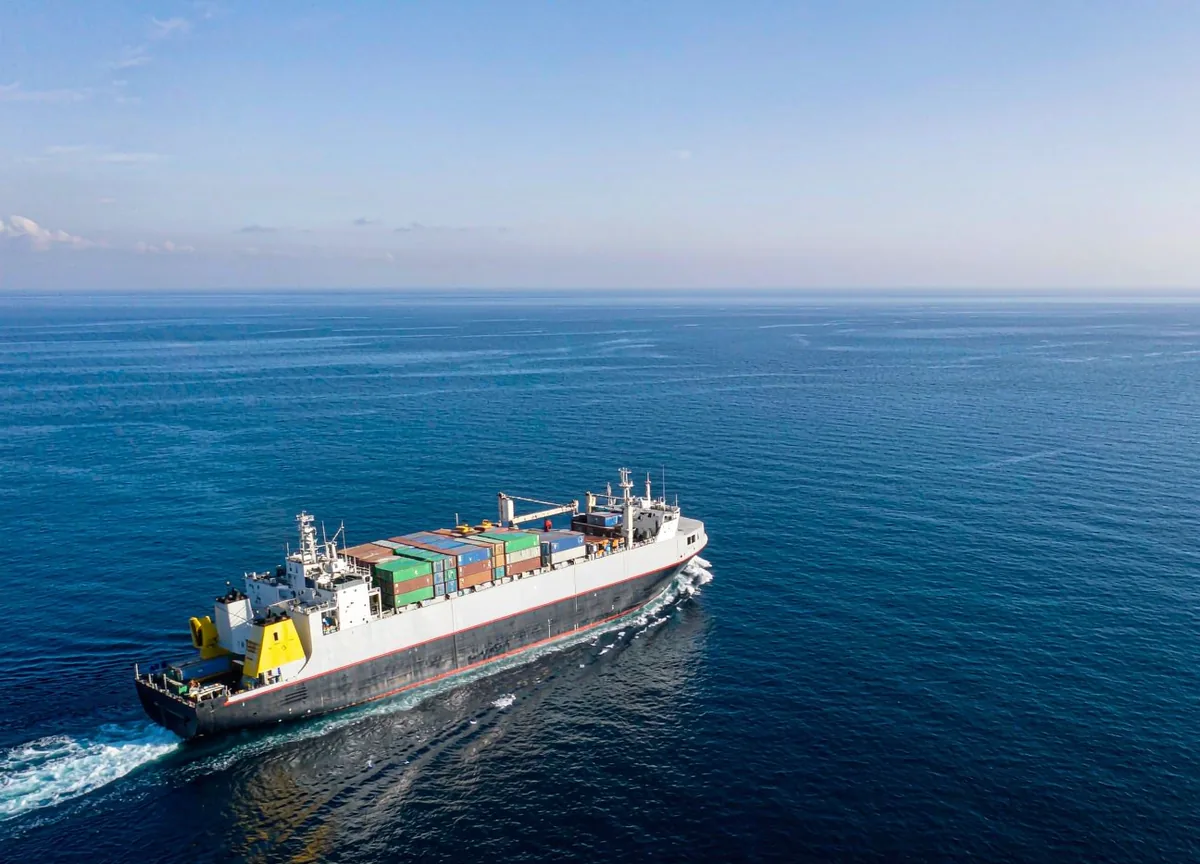
CINS puts the frequency of container ship fires at roughly one every 17 days, with lithium-ion thermal runaway identified as a leading contributor. Against more than 200 million containers moved by sea each year, the probability per shipment is modest. The cost of one fire is not: the cargo on board, the crew, the hull. No carrier will carry an exposure whose size it cannot measure indefinitely.
It should be said plainly that this is an industry recommendation, not an amendment adopted by the IMO. Writing it into the IMDG Code requires the formal amendment process, measured in years. A second track is already moving, however: carriers are tightening on their own. CMA CGM requires all lithium-ion battery cargo to be declared at booking or stuffing in markets including India and Vietnam, with undeclared shipments treated as misdeclaration and fines of up to USD 15,000 per container. Hapag-Lloyd asks for MSDS, a cargo transport conditions certificate and a UN38.3 report for non-DG lithium batteries, plus a separately arranged slot. MSC requires the UN38.3 test summary, MSDS and an SP188 conformity statement. Germany, the Netherlands, Singapore and Thailand are among those pushing for revision within the IMO framework.
What is most often underestimated is the scope. The category is not "batteries" but anything with a battery inside: phones, laptops, power tools, small appliances, power banks, robot vacuums, e-bikes, portable energy storage, and a long tail of machinery with built-in cells. Many shippers conclude that a shipment is general cargo because it is not a battery, rather than because they know how much battery mass the container holds. Between those two judgements sits an entire compliance obligation.
Once Class 9 applies, the added cost is concrete: DG booking review typically runs three to five working days longer, plus a DG surcharge, designated yards and segregated storage, dedicated slots, acceptance restrictions at certain carriers and ports, and a dangerous goods packing certificate at the customs end. These costs do not fall evenly. A full container of battery-heavy goods and a few kilograms of samples can differ severalfold on a unit basis.
One case needs separate handling: battery goods already at sea and declared as general cargo. If an inspection finds the cargo does not match the documents, the usual outcome is a retrospective DG declaration at destination or re-export, with cost and delay falling on the shipper. For this cargo in transit, complete the UN38.3 and MSDS files now rather than waiting for a query to arrive.
Three things are worth doing now. First, re-sort the SKU list by watt-hour rating into three tiers: cells at or below 20 Wh with packs at or below 100 Wh, which may still qualify; anything above, which will be Class 9; and standalone batteries under UN3480 and UN3481, which were always Class 9. Second, treat total battery mass per container as a planning metric, which is precisely what the 20 kg threshold measures. Consolidators need to run it carefully, because three shippers' cargo in one box adds up quickly. Third, assemble documentation before booking: UN38.3, MSDS, cargo transport conditions certificate, drop test report, SP188 conformity statement, and photographs of battery placement at stuffing. One missing document at inspection means destuffing and starting over.
Our advice at A-Choice is to run a battery pre-check before booking, recording product category, watt-hour rating and total battery mass per container on the booking instruction; to mirror declaration-related penalties, container holds, re-export and demurrage back-to-back in the transport contract; and for regular shippers, to refresh battery specifications quarterly, since changing a cell supplier or a model number changes the watt-hour figure, and that is the detail most often missed.
The rule has not landed yet, and there is no case for panic. But carrier-level tightening is a settled direction, and waiting for the formal amendment usually means absorbing a fine first. The work being done now is moving cargo from invisible to visible. The earlier it starts, the cheaper it is.